Everyone Is Doing Melukat in Bali. But What Does It Actually Mean?
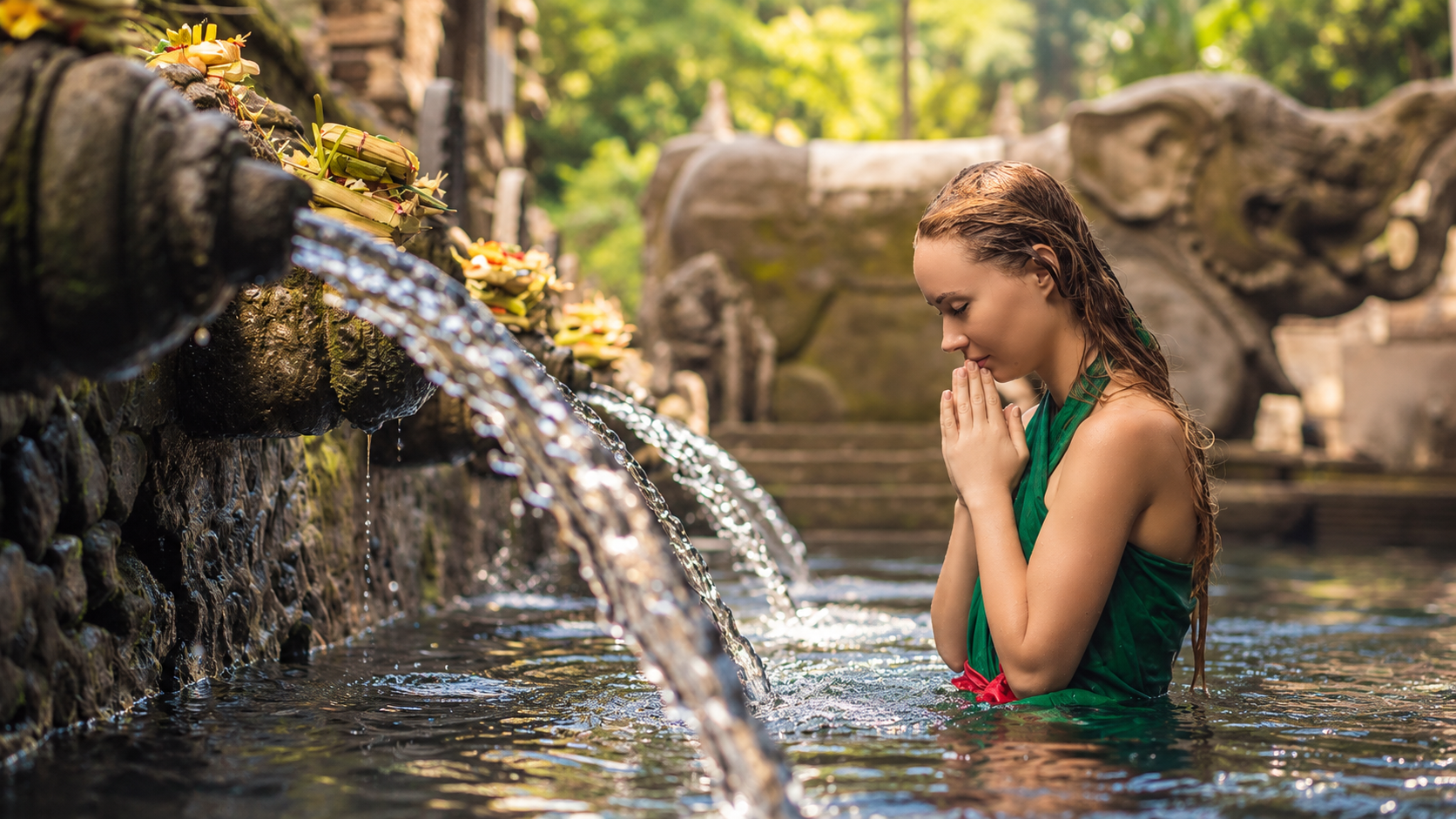
A white sarong. Flowing water. Flower offerings. Eyes closed beneath a stream of holy water.
If you have spent enough time scrolling through Bali content, chances are you have seen some version of this scene.
Melukat has increasingly entered the language of modern wellness travel. Visitors come to Bali carrying heartbreak, emotional exhaustion, difficult endings, or simply the feeling that something in their lives needs to be released. Somewhere along the journey, someone suggests the same thing:
“Maybe you should do melukat.”
And so an interesting question emerges.
Has melukat become another wellness trend?
Or are people being drawn to an ancient ritual because modern life has left us searching for ways to pause, release, and begin again?
The answer deserves more than an Instagram reel.
First, What Is Melukat?
Melukat is a Balinese Hindu purification practice involving tirta, or holy water. Within its religious context, purification is not simply the popular wellness idea of “washing away negative energy.”
It carries spiritual and ceremonial meaning.
For Balinese Hindus, purification practices exist within a much larger relationship with religion, prayer, offerings, community, temples, and the balance between the seen and unseen aspects of life.
More Than a Spiritual Cleansing Ritual
This distinction matters.
Because when melukat is reduced to a picturesque activity on a Bali itinerary, we risk separating the ritual from the tradition that gives it meaning.
So, Why Is Everyone Suddenly Talking About Melukat?
Perhaps the ritual itself is not suddenly relevant.
Perhaps our need for ritual is.
We live in a culture that gives us many ways to move forward, but surprisingly few ways to consciously mark an ending.
A relationship ends.
We go back to work.
A difficult year passes.
Reserve Your Confidential Consultation
Protect your peace of mind and gain unvarnished clarity on your most private life dilemmas. Book an exclusive, discrete session with Madam Donna today.
We start another one.
We burn out.
We take a holiday.
But emotionally, something can remain unfinished.
Why Rituals Can Help Us Mark an Ending
Ritual creates a boundary between before and after.
There is an action.
There is intention.
There is a moment in which we acknowledge:
Something has happened to me, and I am ready to relate to it differently.
This may partly explain why spiritual cleansing practices resonate so strongly with people who did not grow up with them.
But Is Melukat Becoming a Wellness Trend?
In some spaces, undeniably, melukat is now presented through the language of wellness tourism. But calling the ritual itself a “trend” misses something important.
The trend is not melukat.
The trend is the growing global desire to seek healing, meaning, and transformation through traditional spiritual practices.
And that creates both an opportunity and a responsibility.
Experiencing Melukat With Respect
There is nothing inherently wrong with being curious about a tradition outside our own. A meaningful encounter with another culture can invite humility, reflection, and a different way of understanding ourselves.
The question is how we enter that space.
Are we arriving as consumers looking for the next spiritual experience?
Or as guests willing to understand that the ritual existed long before it appeared on our feeds, and will continue to exist long after the aesthetic moves on?
Perhaps that distinction is where the real conversation about melukat should begin.